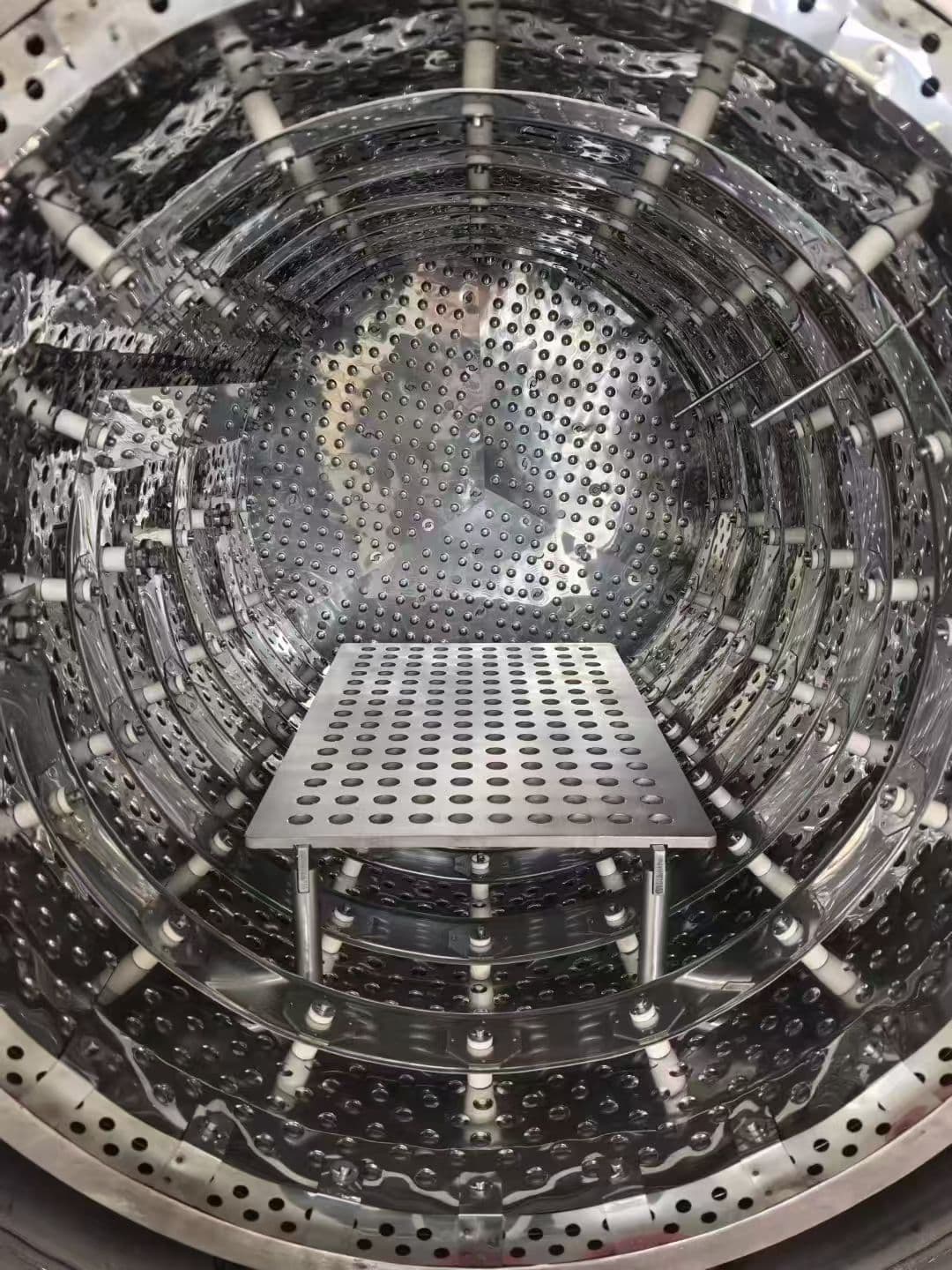
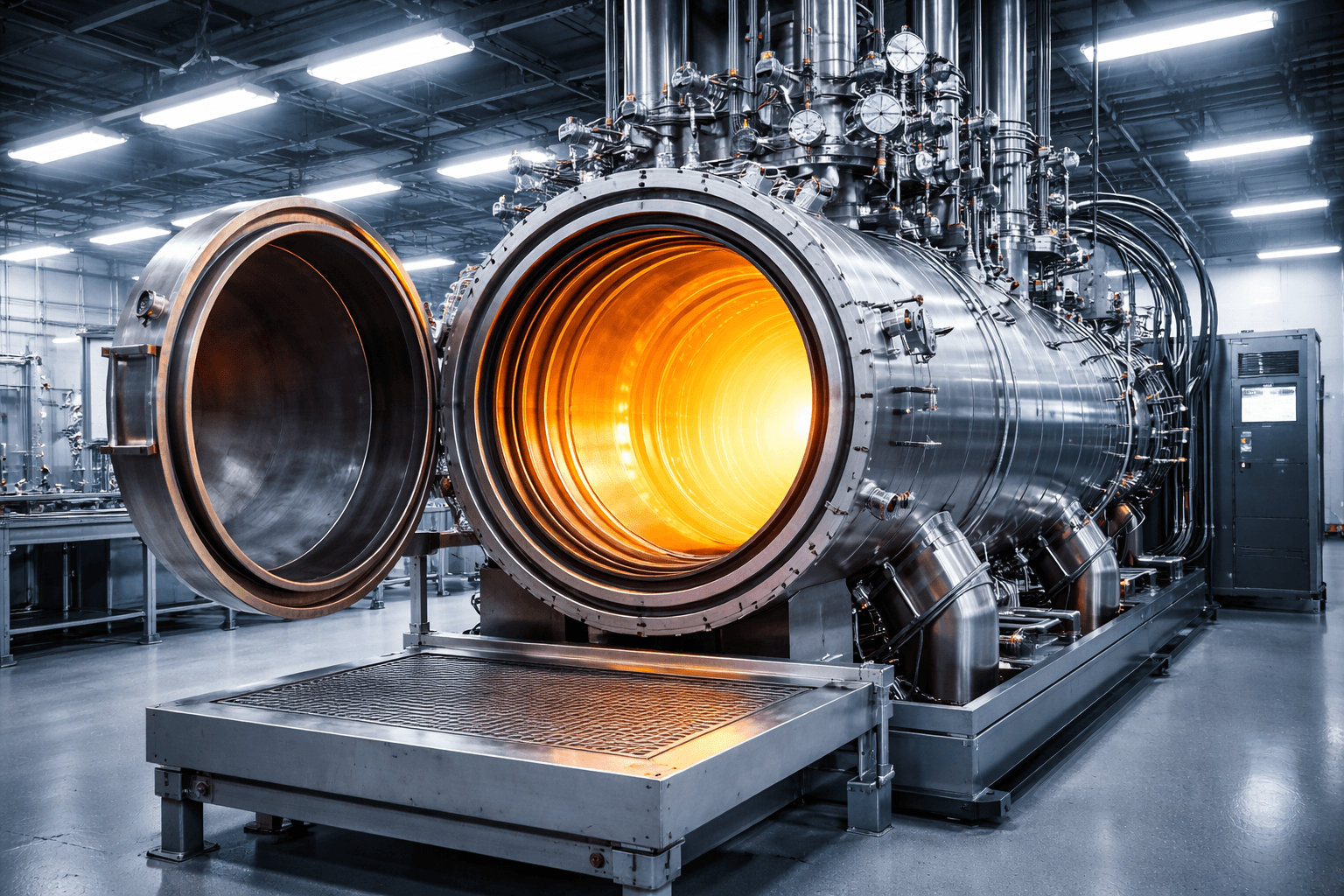
- Intended Application and Process Requirements
Vacuum furnaces are used for processes such as brazing, sintering, annealing, and various heat treatments, each with distinct technical requirements.
Although a single furnace can be designed to support multiple processes over time, it is best practice to operate the furnace for one application at a time. Each process involves different temperature ranges, materials, and potential contaminants. Understanding whether the furnace will be primarily used for brazing, heat treatment, or sintering helps define the optimal chamber design, heating system, and atmosphere control.
- Maximum Operating Temperature and Temperature Uniformity
The required operating temperature directly influences furnace construction. Heating elements, insulation type, and hot zone materials must be selected based on the maximum temperature and thermal cycling conditions.
Equally important is temperature uniformity across the workload. Poor uniformity can result in inconsistent mechanical properties, incomplete brazing, or non-uniform microstructures. A well-designed vacuum furnace should meet tight temperature uniformity standards within the usable work zone.
- Vacuum Level and Atmosphere Control
Different applications require different vacuum levels. High-vacuum performance is essential for oxidation-sensitive materials and clean brazing operations, while some heat treatment processes may rely on partial-pressure or inert-gas atmospheres.
The pumping system configuration, leak rate performance, and gas backfilling control all play a critical role in process repeatability. Selecting a furnace with vacuum capability matched to the application avoids unnecessary complexity while ensuring reliable results.
- Cooling Method and Cooling Rate
Cooling capability is often underestimated but is a key factor in furnace performance. Depending on the process, controlled slow cooling or rapid gas quenching may be required to achieve the desired material properties.
The choice of cooling gas, pressure rating, and heat exchanger design should be evaluated based on part geometry, material type, and distortion sensitivity. An inadequately designed cooling system can limit productivity and compromise part quality.
- Material Compatibility and Contamination Control
Vacuum furnaces are frequently used for high-alloy steels, titanium, nickel-based alloys, and other reactive materials. Furnace materials must be compatible with these alloys to prevent contamination.
If the furnace will be used for different applications over time, attention must be given to residue management and process separation. Operating the furnace in defined production phases, rather than frequent process switching, helps maintain cleanliness and process stability.
- Customization and Future Flexibility
No two production environments are identical. Chamber size, loading method, power configuration, automation level, and control systems should be tailored to actual production needs rather than theoretical maximum capacity.
Customization also provides future flexibility. A furnace designed with expandable capability allows manufacturers to adapt to new materials or applications without compromising current performance.
- Service, Reliability, and Long-Term Support
Beyond technical specifications, long-term reliability and service support are critical. A vacuum furnace is a capital investment expected to operate consistently for many years. Design quality, component selection, and access to technical support directly impact uptime and operating cost.
Choosing a manufacturer with strong engineering expertise and application knowledge ensures the furnace performs as intended over its full lifecycle.
To sum up, selecting an industrial vacuum furnace requires more than comparing basic specifications. Application requirements, thermal performance, vacuum capability, cooling design, and customization must all be evaluated together.